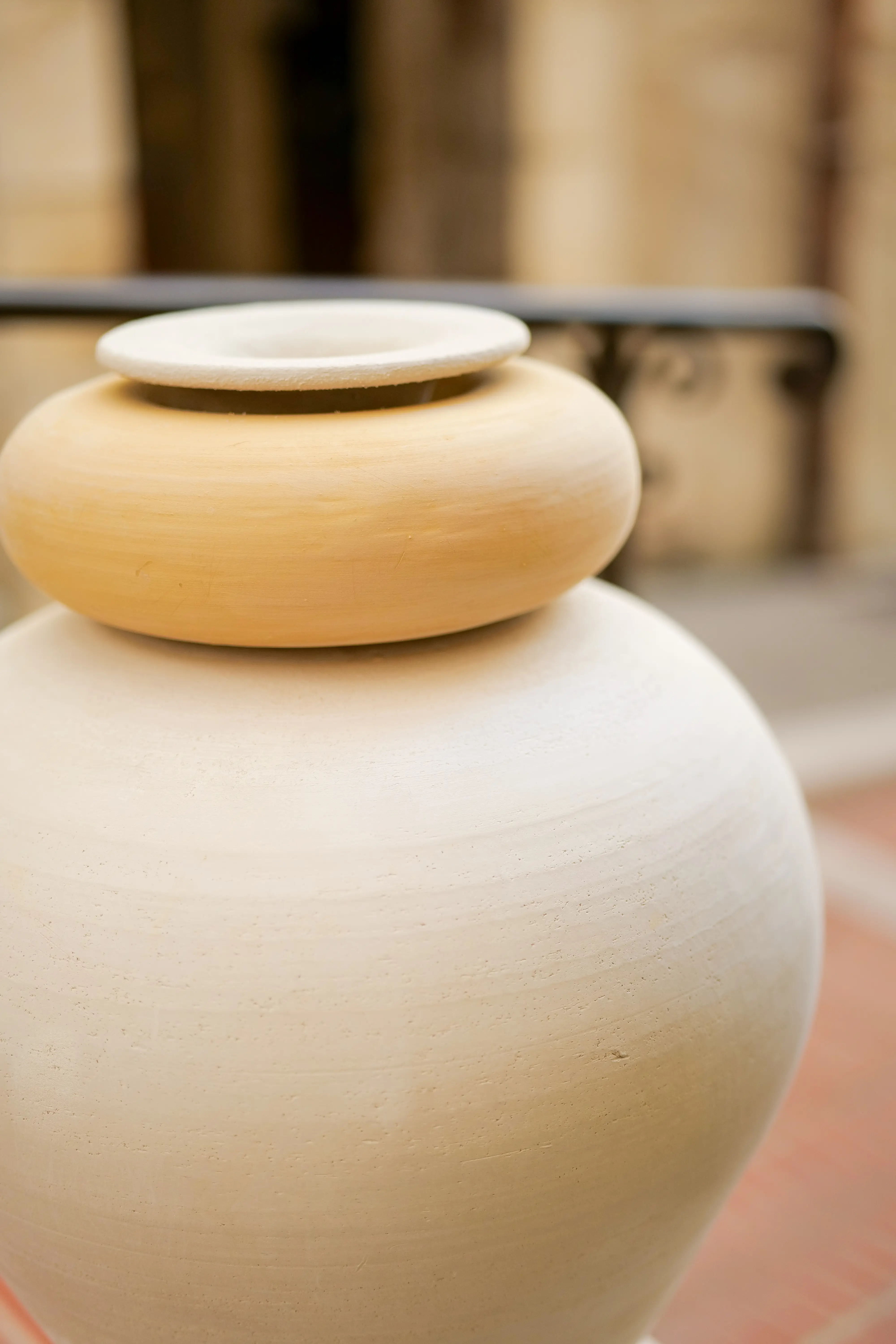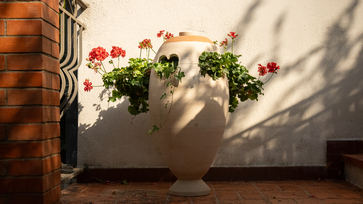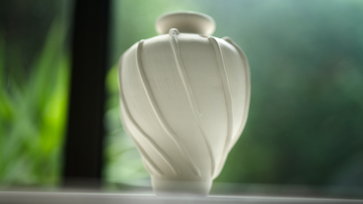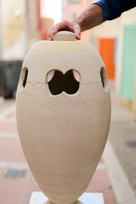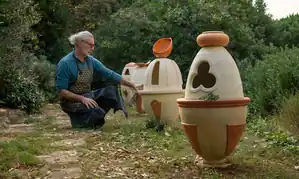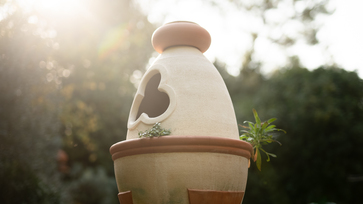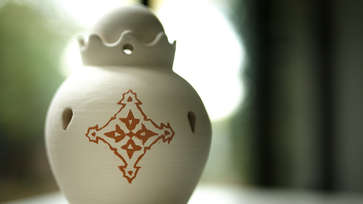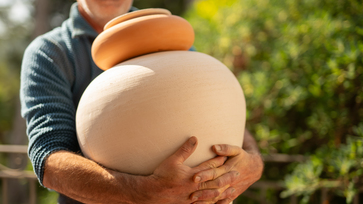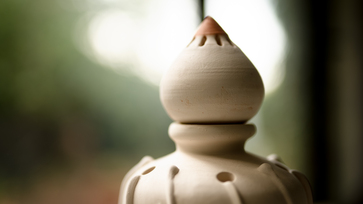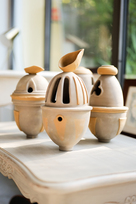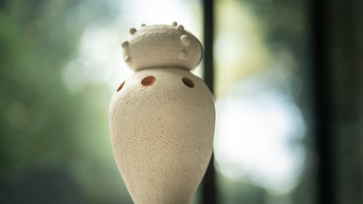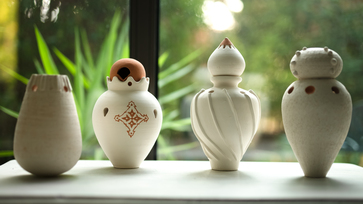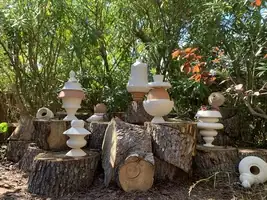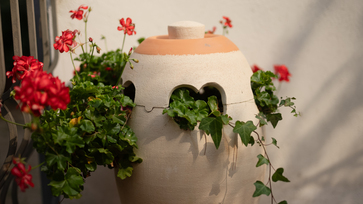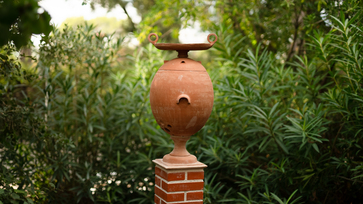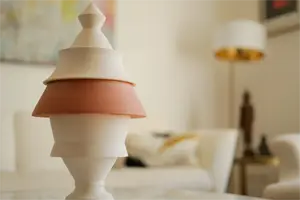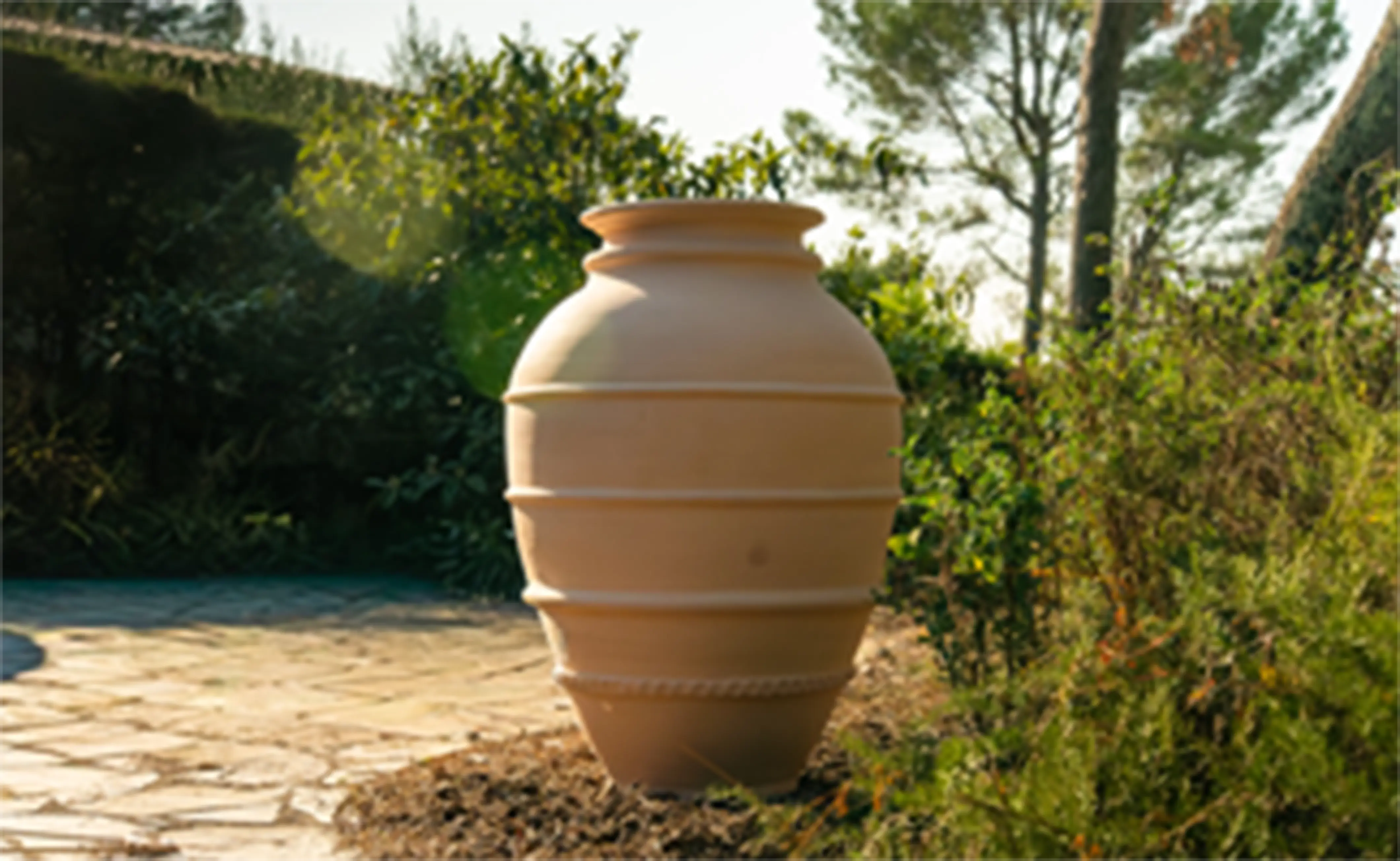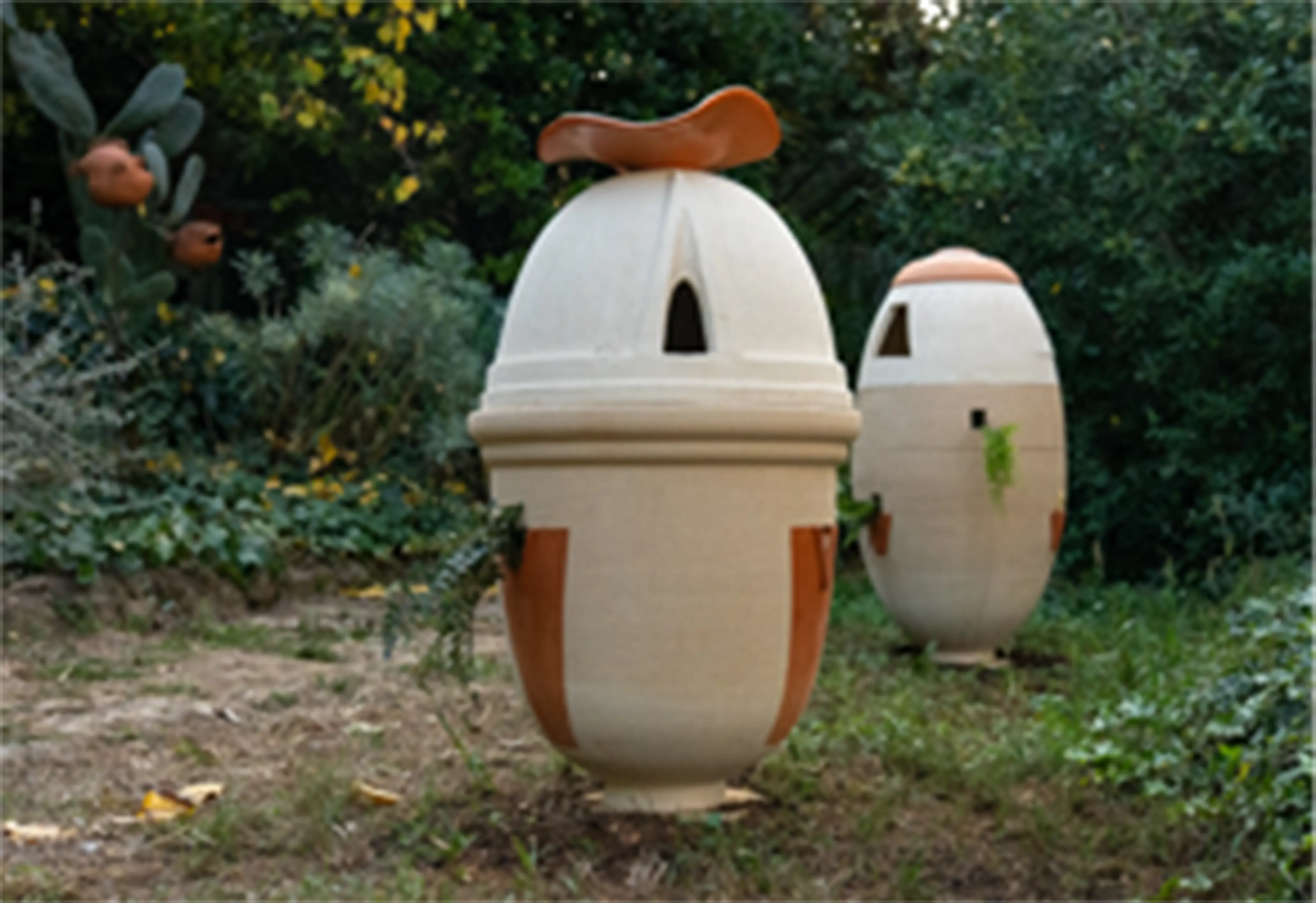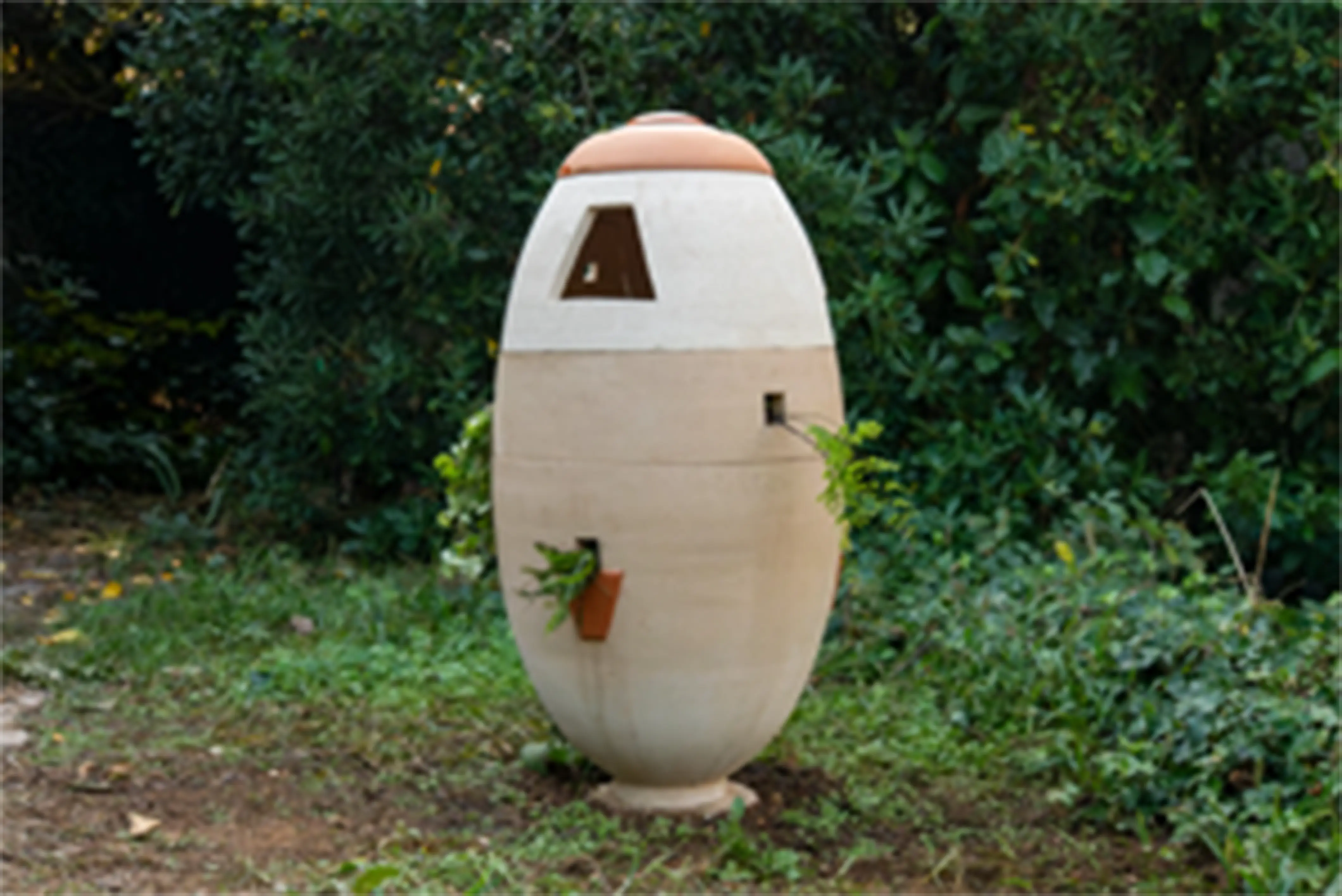



Atelier de Maindis designs and handcrafts terracotta jars for gardens. Conceived as unique pieces, they result from close collaboration between the studio, landscape architects and clients, in order to create original works that fully integrate into the vision and aesthetic of each project.
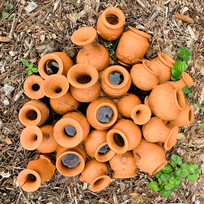
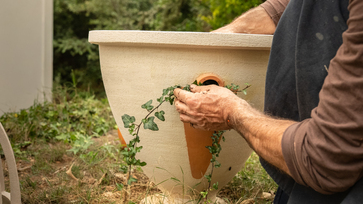
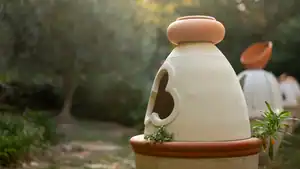
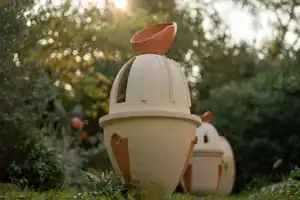
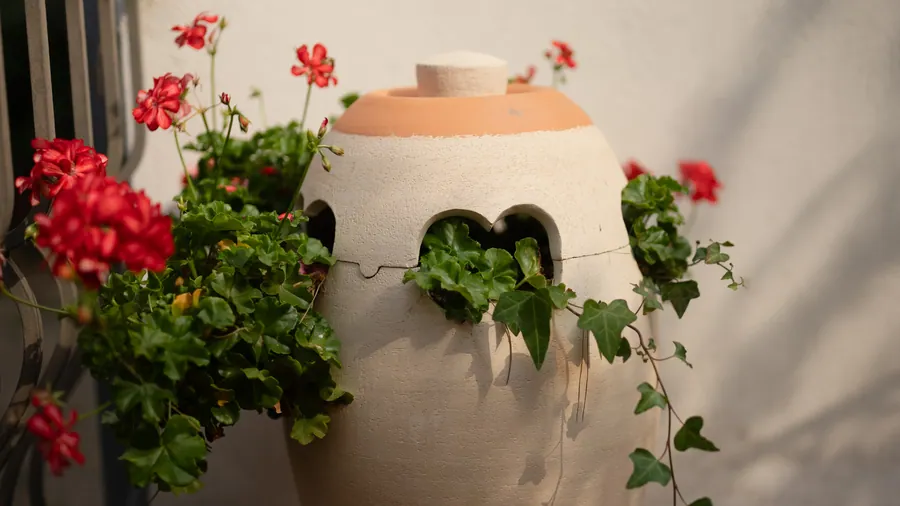
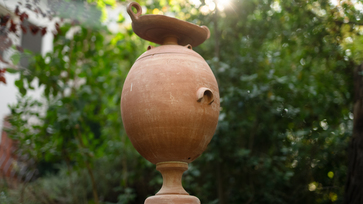
The specificity of this work lies in the proposal of a progressive naturalization of the pieces, beyond the initial creative process. These unexpected transformations — changes in color, weathering, colonization by plants or insects — testify to a living dialogue between matter and its environment. The pieces evolve until they gradually blend into the landscape. Niches, shaded areas and water reserves are designed to encourage these metamorphoses. By embracing this return to the earth, the intention is to reposition humans among other living beings. These terracotta sanctuaries*, scattered throughout the landscape, become visual landmarks inviting contemplation and awareness. They transform into intermediary objects, establishing a sensitive and profound connection with the living world.
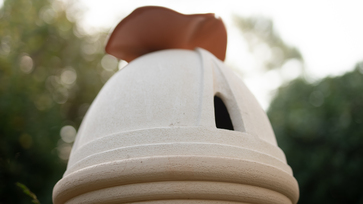
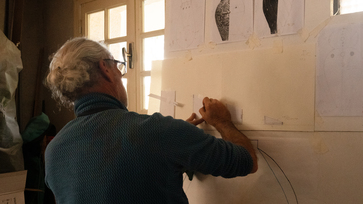
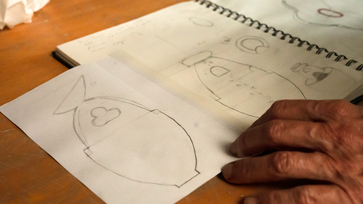
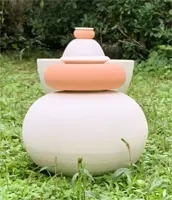
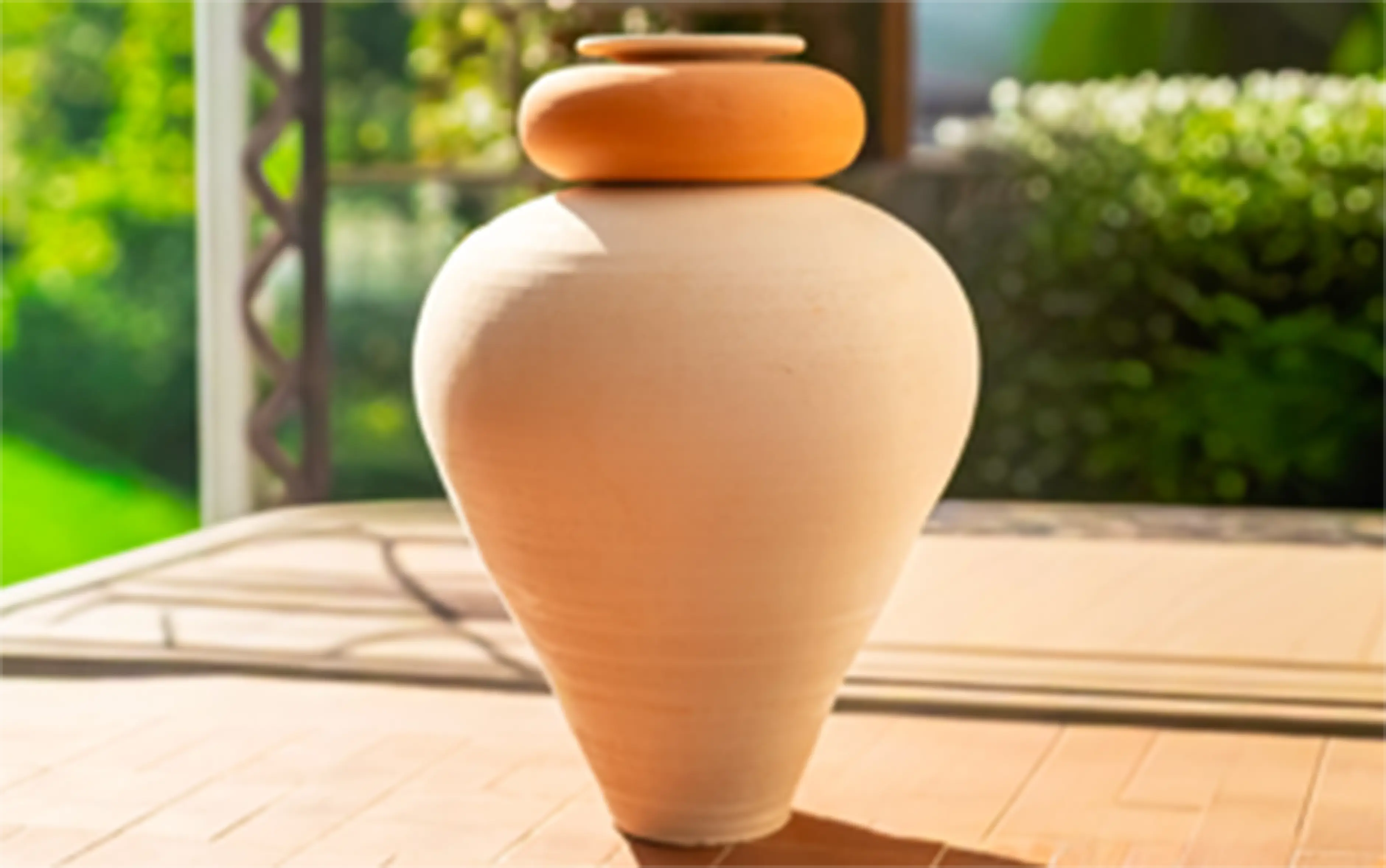
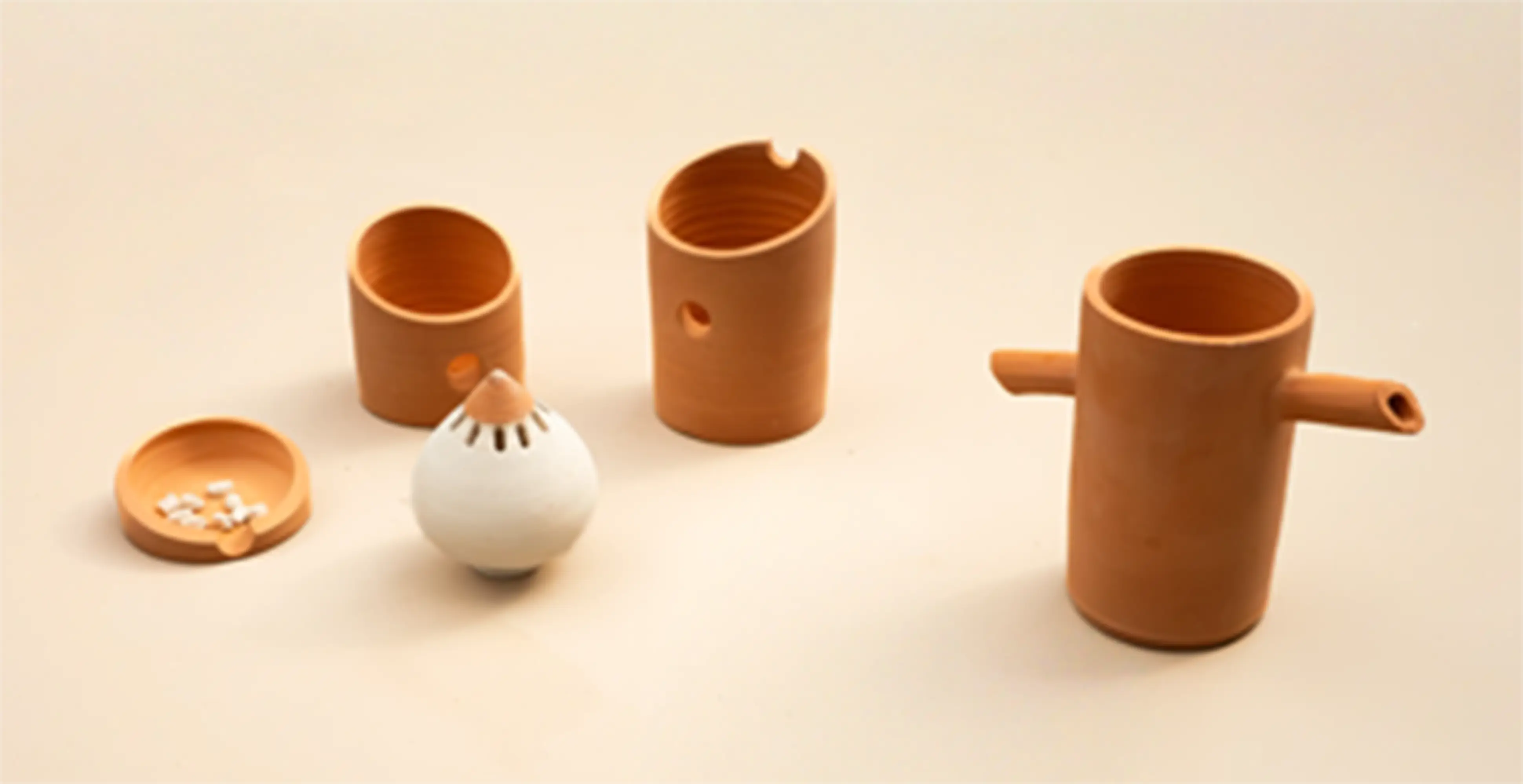
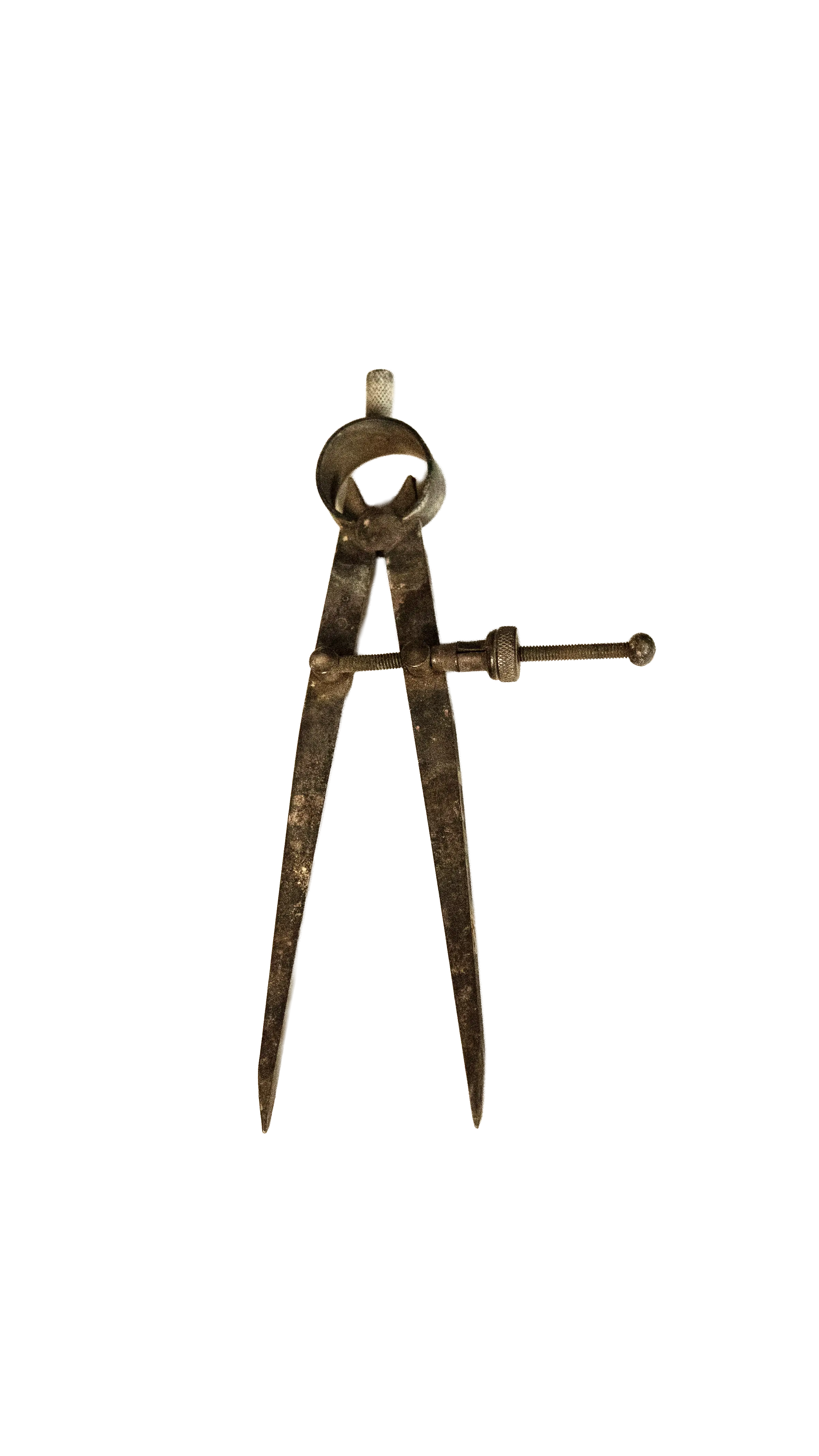
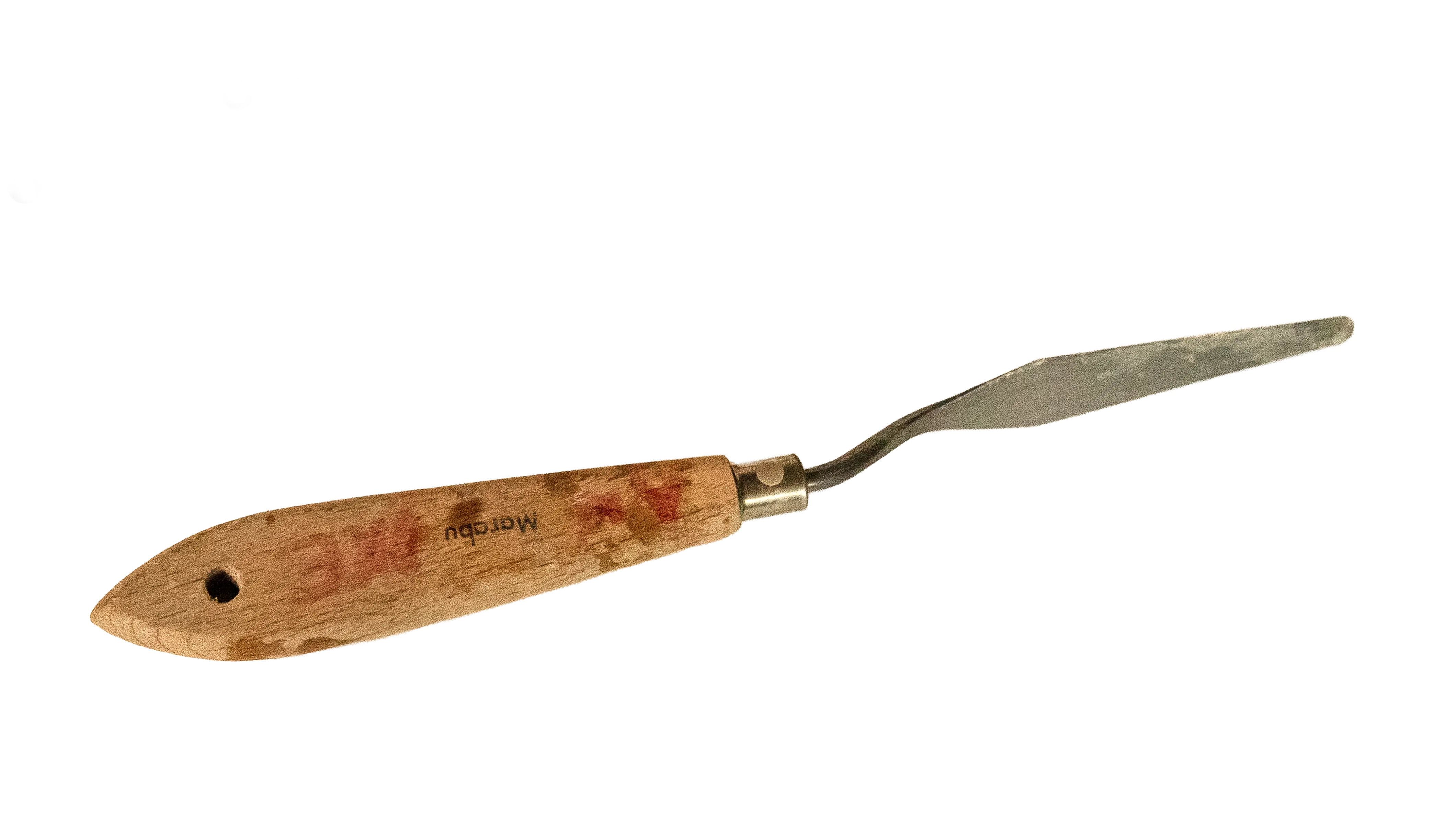
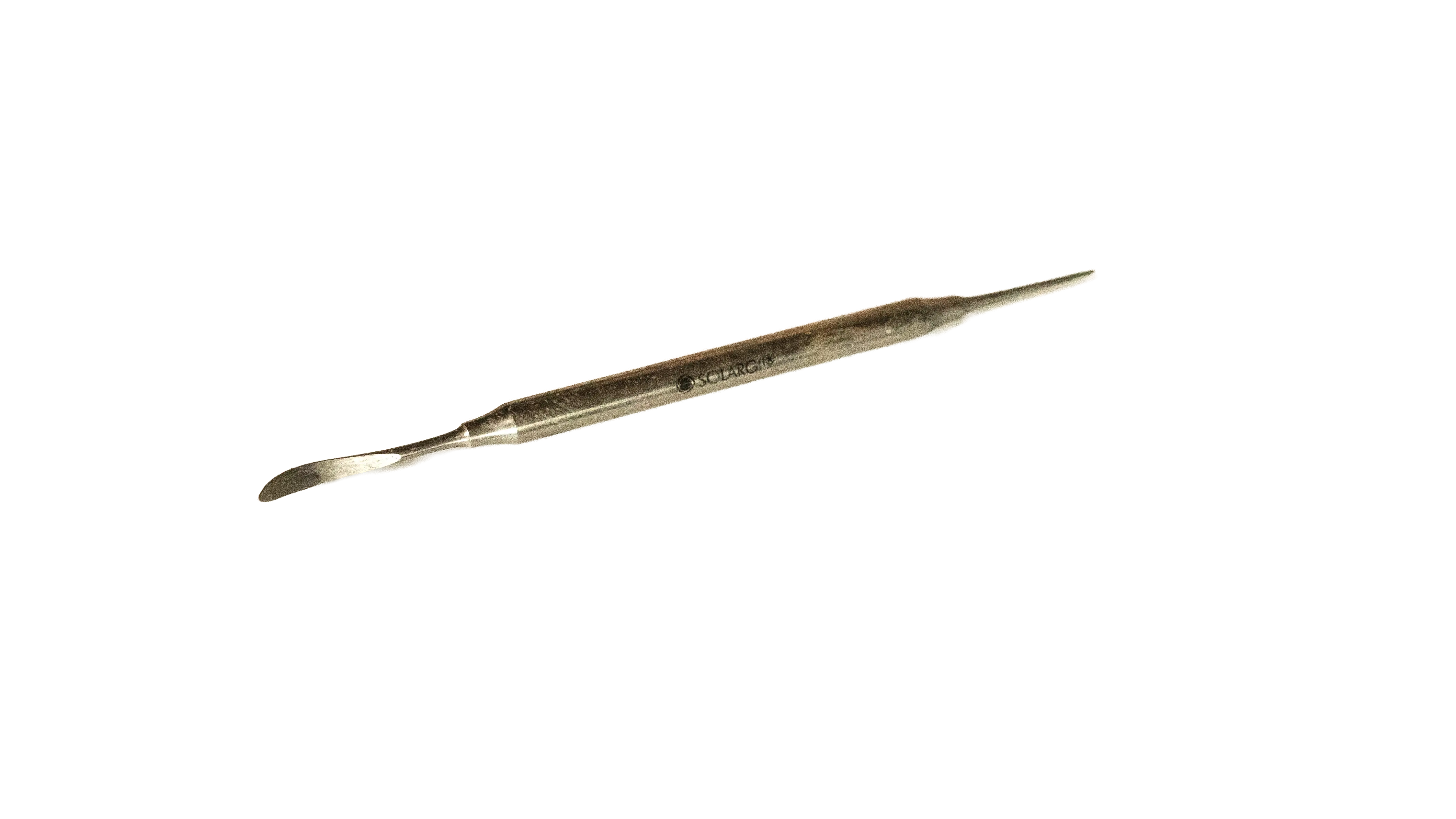
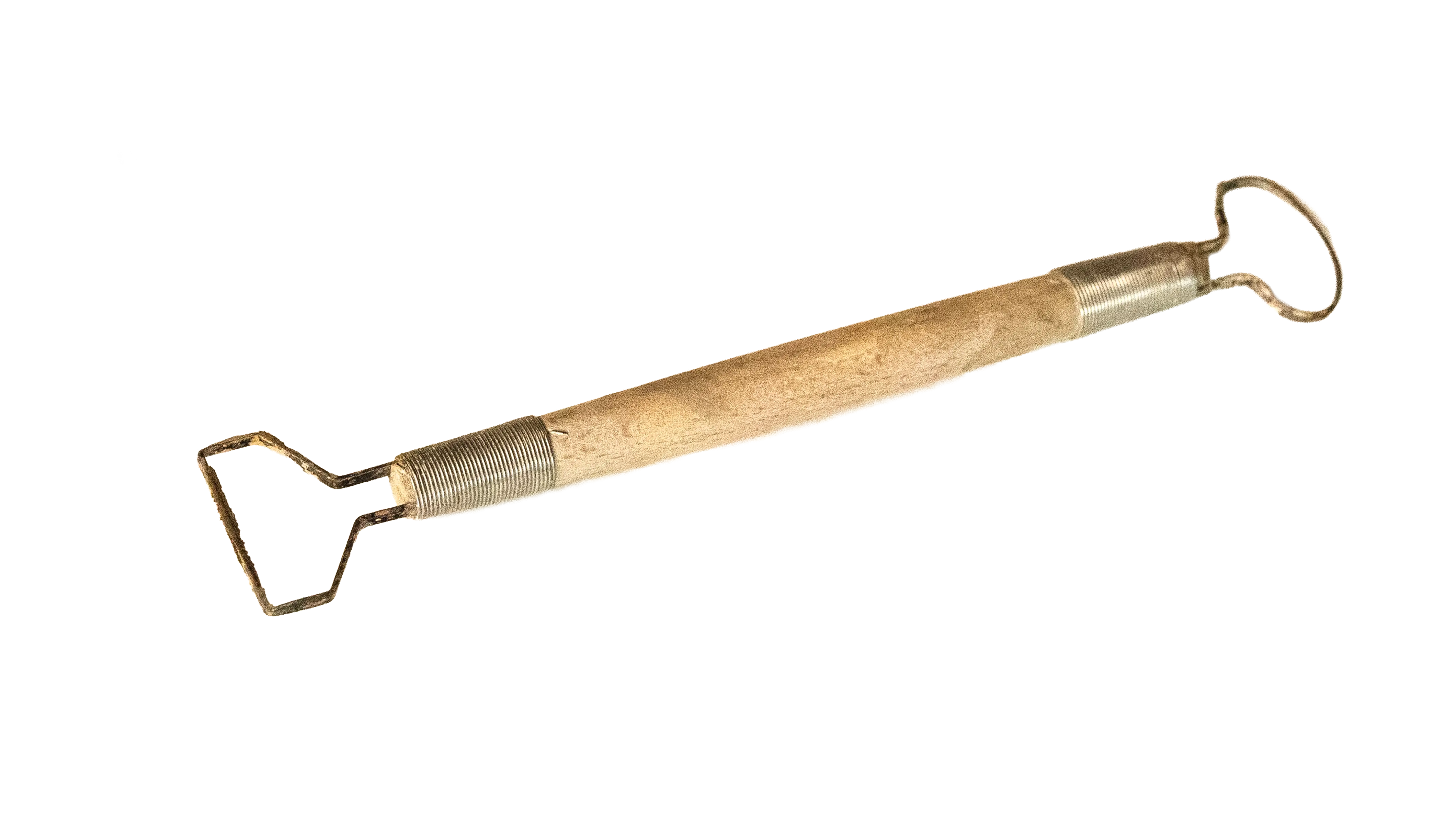
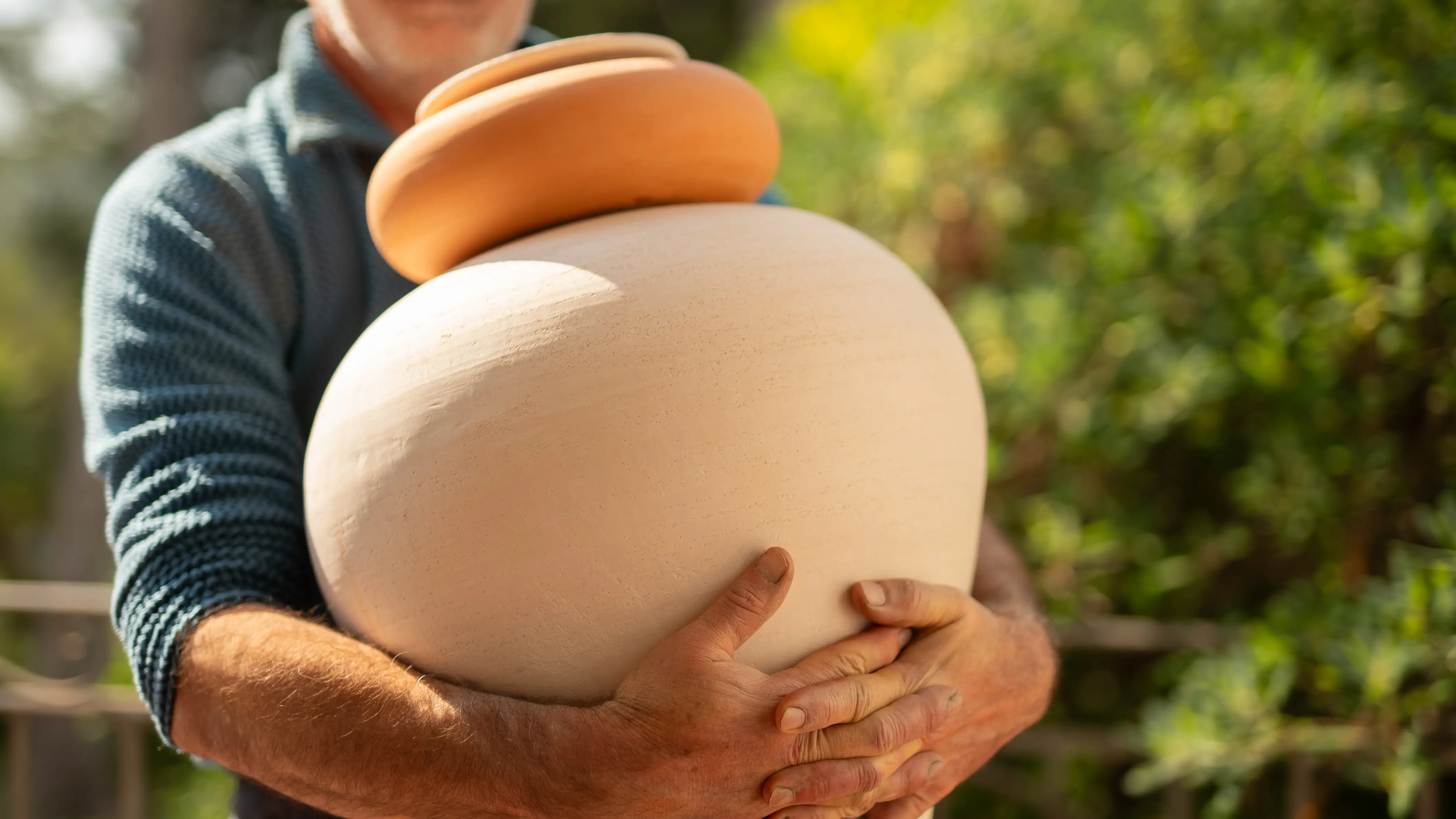
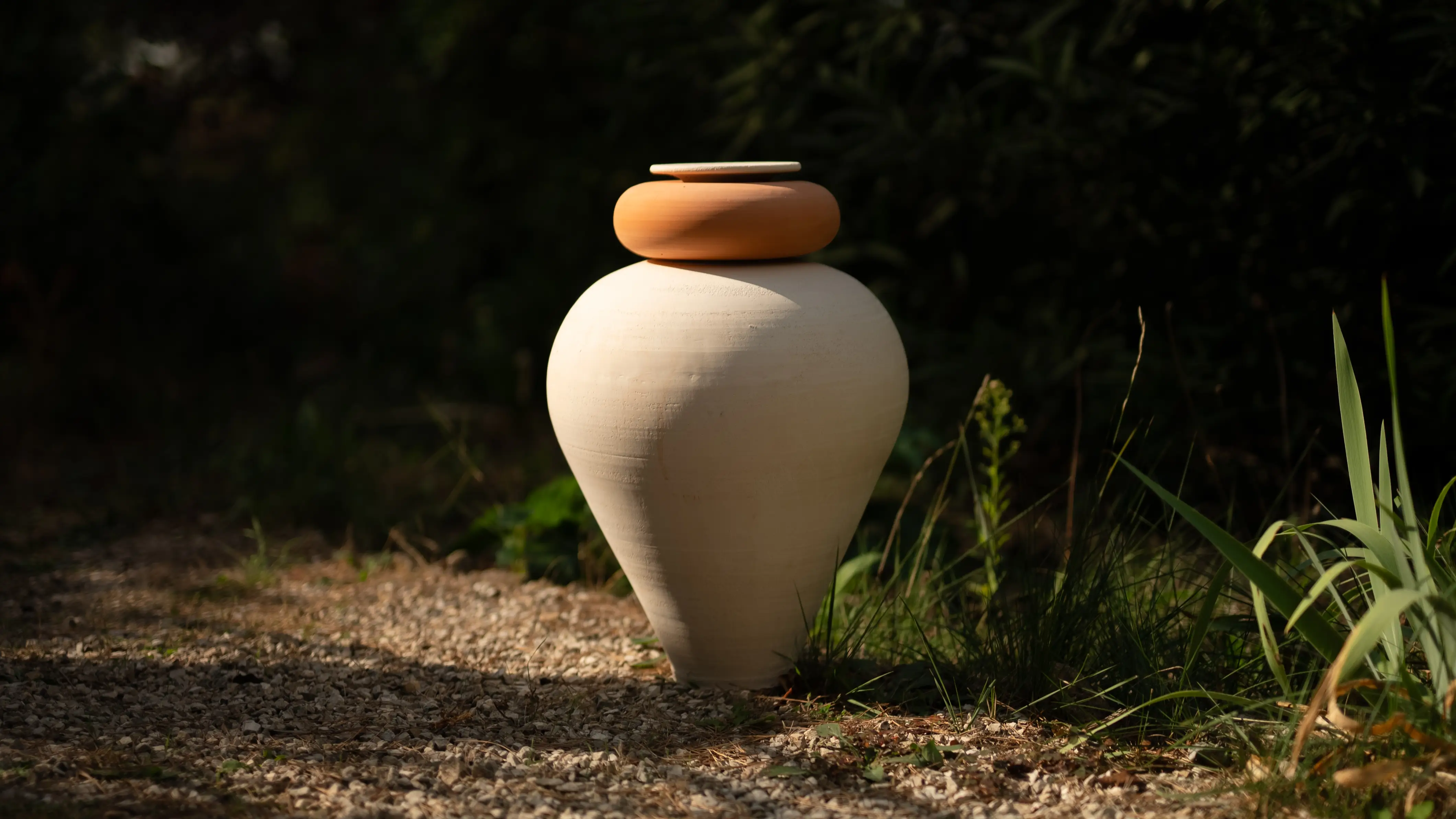
Drawing from the traditional forms of terracotta jars, the studio revisits an ancient know-how while integrating new functions through modular and geometric structures. Drawings and sketches guide the choice of forms according to the specific nature of each project. Clay scale models, approximately 30 cm high, allow for an initial spatial projection of the volumes, making it possible to refine proportions before the final production. The materials used — notably stone and clay — emphasize both durability and fragility. Natural color palettes, contrasting white and brick red, enhance the raw simplicity of the material while blending harmoniously into the landscape. The pieces are primarily wheel-thrown by hand, using frost-resistant clays rich in grog, chosen for their thermal and mechanical strength.
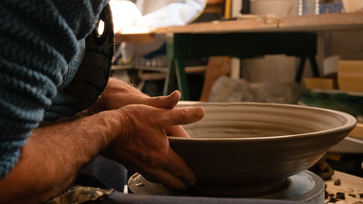
In my work, the hand is not merely an instrument: it explores, hesitates, and engages in dialogue with the earth. William Morris, within the Arts & Crafts movement, stated that “art is the expression of man’s joy in his labour.” He saw in it an alliance between gesture and thought. This vision echoes what we now call the intelligence of the hand — an embodied form of knowledge, both sensitive and reflective, where matter guides creation as much as it is shaped by it. In this tactile way of thinking, the hand learns by doing. The repetition of gesture becomes a space of freedom rather than constraint. In the studio, this silent intelligence reveals itself through intuitive decisions, subtle adjustments, and fragile balances. Thus, the hand thinks through touch. It is in this spirit that my jars take shape: as an extension of the living world, where gesture becomes a shared breath between humanity, earth, and time.
“Nothing is more silent than a garden where nothing dies.” With this quote by Colette, one may begin to outline a definition of the exceptional garden. It is not a place of order, but one of vitality — a living organism shaped by breath, slowness, and exchange. In Colette’s writing, the garden breathes; it does not impose itself but allows itself to be approached. One enters it as one would enter warm earth, amidst scents, light, and rustling sounds. This garden does not obey geometry, but time — the time that causes wilting, greening, and cracking. It is exceptional because it transforms, because it allows moss to reclaim stone, grasses to pierce paving, and rain to glaze a forgotten jar. It is also a place of memory — of childhood, of transmitted gestures, of hands that care without possessing. Thus understood, the exceptional garden is not a backdrop, but a breath of the world: a space where humans, earth, and other living beings share the same substance, the same fragility, and the same energy.
Are you a landscape architect, project owner, public body or the owner of an exceptional garden? Atelier de Maindis supports you in designing and crafting unique terracotta jars, giving a strong and singular identity to your outdoor spaces.
Bespoke creations tailored to the site, aesthetic and intentions of each project.
A collaborative process: sketches, models and dialogue to refine the proposal before production.
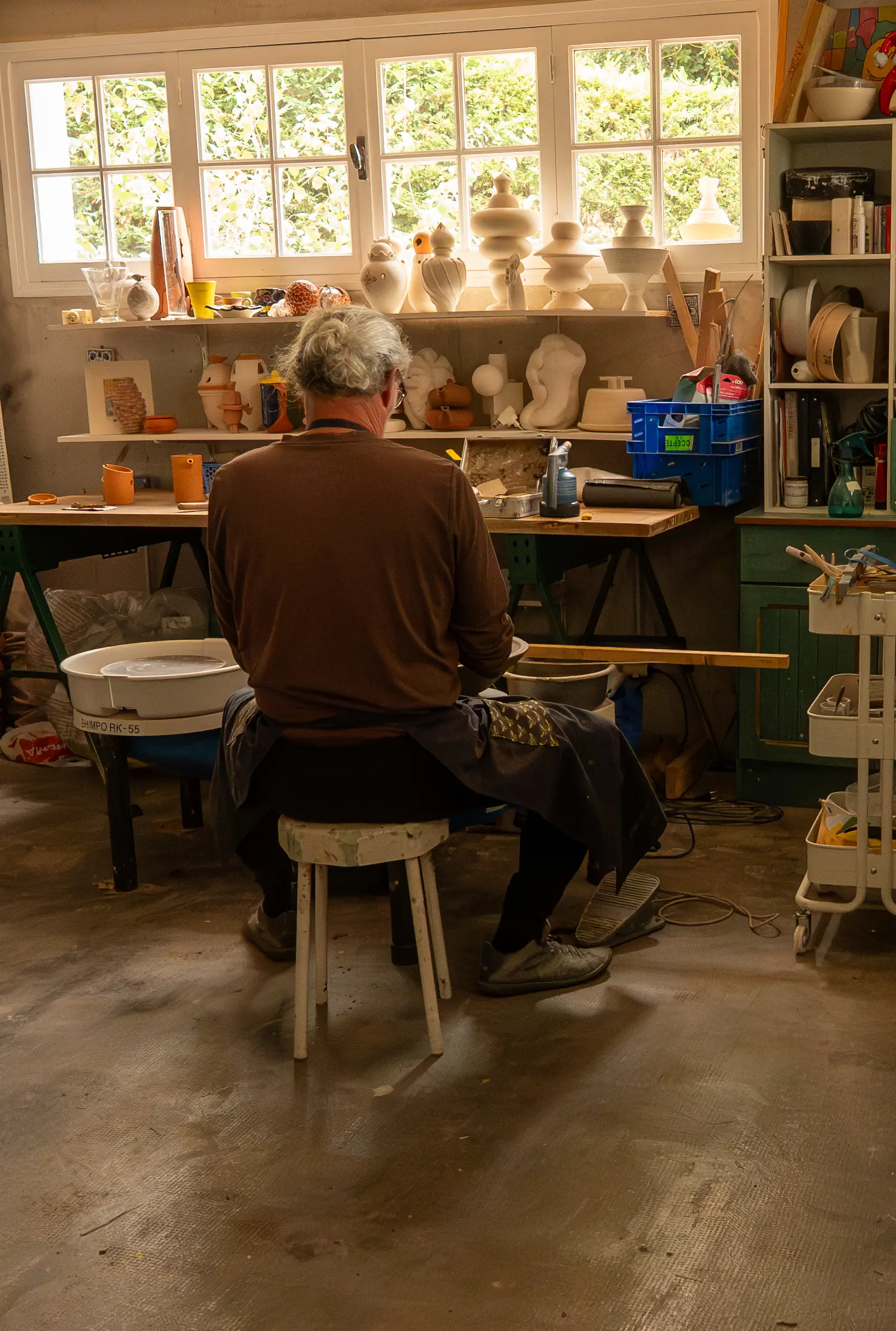
Artisanal know-how: wheel-thrown pieces, made from weather-resistant clays, designed to endure and evolve naturally over time.
A strong artistic signature: each jar becomes a visual landmark and a living space at the heart of the garden.
Andrea de Maindis designs and handcrafts terracotta jars for gardens, where matter enters into dialogue with the living world. His works continue to exist beyond the initial creative gesture: exposed to the elements, they acquire patina, crack, and allow themselves to be colonised by moss, plants and insects. These transformations, reminiscent of ephemeral Land Art installations, celebrate the impermanence and fragility of the living world. By embracing this return to the earth, A. de Maindis seeks to reposition humans among other living beings. His jars become meditative presences, landmarks in the landscape that invite contemplation and awareness. His visual language stands at the crossroads of decorative arts and Land Art, blending geometry, modularity and ancestral know-how. Inspired by the traditional Biot jar, he revisits this emblematic form to make it the medium of a dialogue between culture and nature. Coming from a lineage of small Italian farmers from the Montefeltro region, A. de Maindis grew up between France and Italy, in a deeply physical relationship with the earth. An engineer in biotechnology, he found in ceramics a sensitive extension of his reflection on matter, transformation and the vitality of the world. Trained at the École d’Art Céramique de Vallauris in 2021, he has since been pursuing a practice enriched by encounters and workshops with renowned ceramists.
or by email:
andrea@atelier-de-maindis.fr
+33 7 66 46 06 82